Customers / Energy & Renewables
One platform for every megawatt on your grid
Solar arrays, wind farms, battery banks, substations, and legacy generation assets produce millions of data points every hour. Mango by Radix IoT unifies them into a single operational layer so your teams can monitor, control, and optimize the entire portfolio from anywhere.
The Grid Is Changing
Energy infrastructure is being rewritten
Distributed energy resources, grid modernization mandates, and the rapid scaling of renewables are transforming how power is generated, managed, and delivered. The platforms that served centralized generation cannot keep pace.
The SCADA market for renewable energy is projected to grow from $1.76B in 2024 to $3.56B by 2030 at a 12.7% CAGR. That growth reflects an industry-wide shift toward intelligent monitoring for distributed generation, and the operators who invest in unified platforms now will compound their advantage.
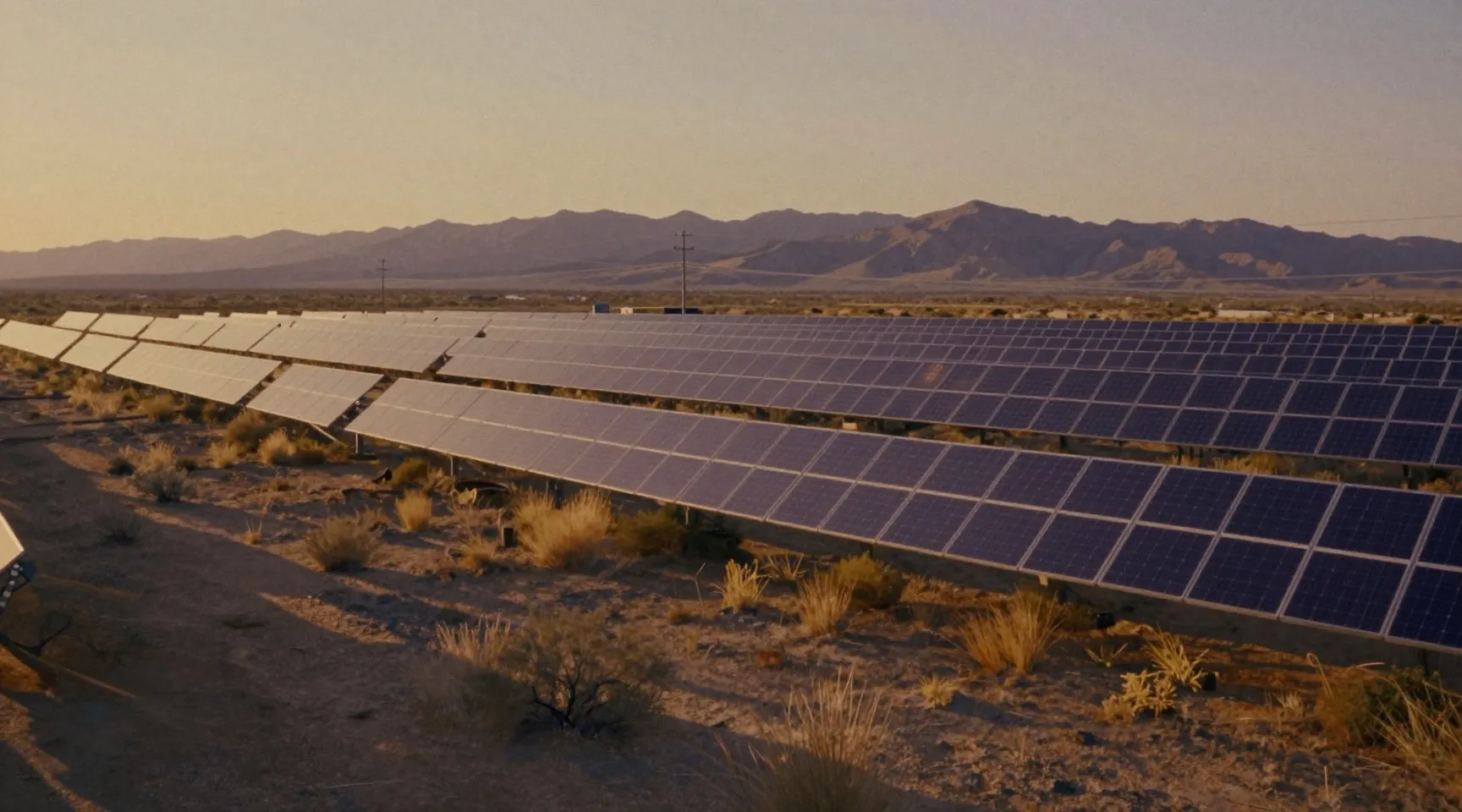
Solar holds nearly two-thirds of the renewable SCADA market in 2025. The sheer number of inverters, trackers, combiner boxes, and weather stations at each installation creates monitoring complexity that multiplies with every new site added to a portfolio.
Generation step-up transformers now take 143 weeks to procure. That bottleneck forces operators to maximize every existing asset. Real-time monitoring of transformer loading, oil temperature, and dissolved gas analysis is no longer optional when replacements take nearly three years to arrive.
Capabilities
What Mango by Radix IoT does for energy operations
Multi-source asset unification
Solar inverters from one vendor, wind turbines from another, battery management systems from a third, all feeding into substations running legacy protocols, while your IT network (SNMP) and cybersecurity monitoring run on entirely separate stacks. Mango by Radix IoT bridges the IT/OT divide, connecting every asset type through 25 data source types including DNP3, Modbus, IEC 61850, SNMP, and MQTT into a single operational model. Your teams see generation, storage, grid infrastructure, and network health in one view, not in twelve vendor dashboards.
Remote-first control with Cloud Connect
Most energy assets sit in places nobody wants to drive to. Desert solar fields, offshore wind platforms, remote substations. Mango by Radix IoT's Cloud Connect module provides secure, outbound-only access to every installation without VPNs or open firewall ports. Diagnose faults, push firmware, adjust setpoints, and verify operations from a central control room. Teams using this approach have cut truck rolls to remote sites by 38%.
Predictive intelligence and smart alerting
A single utility-scale solar farm can generate thousands of alarm events per day. Most of them are noise. Mango by Radix IoT's six-level alarm severity, contextual suppression, and rule-based automation filter out the false positives and escalate what actually needs attention. Combine that with AI-ready data pipelines for predictive maintenance, and your teams shift from reactive firefighting to proactive asset management.
Compliance and ESG automation
NERC CIP requirements, FERC reporting, state renewable portfolio standards, and investor ESG disclosures all demand accurate, auditable operational data. Mango by Radix IoT captures performance, emissions, and generation metrics from live telemetry and produces audit-ready reports without manual data gathering. When regulators or investors ask for your numbers, you pull them in minutes instead of weeks.
Battery energy storage monitoring
BESS is the fastest-growing infrastructure category in energy, and it demands monitoring that legacy SCADA was never built for. Mango by Radix IoT tracks cell-level temperatures for thermal runaway early detection, state of health degradation curves, charge/discharge optimization, and capacity fade over time. Fire safety compliance reporting pulls directly from live sensor data. Whether you are running lithium-ion, flow batteries, or emerging chemistries, every rack and module feeds into a unified view alongside your generation and grid assets.
DER management and virtual power plants
Distributed energy resources are multiplying faster than grid infrastructure can keep up. Generation step-up transformers now have 143-week lead times, forcing operators to optimize what they have. Mango by Radix IoT provides the real-time visibility layer for coordinating solar, wind, storage, and demand response across a virtual power plant. Track capacity factor and curtailment at every site, predict inverter failures before they take generation offline, and feed clean telemetry into grid dispatch systems so your DER portfolio responds to market signals in real time.
The Distributed Energy Challenge
How energy monitoring evolved
The tools built for centralized power plants were never designed for a world where generation is scattered across thousands of sites, each running different equipment from different vendors.
Legacy SCADA
Purpose-built for centralized plants. Single protocol, single vendor, single site. Worked well when generation meant one large facility with a dedicated control room, but that model is shrinking every year.
Where most startedFragmented vendor tools
As renewables grew, each vendor shipped their own monitoring portal. Operators ended up with six dashboards, three alarm systems, and no unified view. Cross-site analysis required spreadsheets and manual data stitching.
Where many are stuckUnified platform
Mango by Radix IoT bridges the gap. Every asset, every protocol, every site feeds into one operational layer. Teams get portfolio-wide visibility, edge-to-cloud deployment flexibility, and the clean data foundation that AI-driven optimization requires.
Where Mango by Radix IoT takes youMeasured Impact
Outcomes that compound
Based on aggregated data from Radix IoT energy and utility customer deployments, 2023–2025
FAQ
Frequently asked questions
Does Mango by Radix IoT support DNP3 and other utility-grade protocols?
Yes. Mango by Radix IoT supports DNP3 (both serial and TCP/IP), IEC 61850, IEC 60870-5-104, Modbus TCP/RTU, MQTT, OPC-UA, and dozens more utility-grade protocols out of the box. DNP3 is the dominant protocol in North American utility SCADA environments, and the platform is designed so that protocol diversity is a solved problem, not an ongoing integration project.
How does Mango by Radix IoT handle DER integration across a distributed portfolio?
Mango by Radix IoT treats every DER site as a first-class data source, connecting solar arrays, battery storage, wind turbines, and microgrids through their native protocols into a single normalized data model. The edge-to-cloud architecture means you can run Mango by Radix IoT locally at each site for low-latency control, then aggregate everything into central dashboards for portfolio-level visibility. Adding a new site does not require rearchitecting your monitoring infrastructure.
Can Mango by Radix IoT help with NERC CIP compliance?
Yes. Mango by Radix IoT supports NERC CIP compliance workflows through role-based access controls, comprehensive audit logging, and secure communications. Every user action, configuration change, and data access event is recorded with timestamps and user attribution. The platform can be deployed within segmented network architectures that align with CIP requirements for electronic security perimeters, and its outbound-only Cloud Connect module avoids the need for inbound firewall rules that complicate compliance posture.
How does Mango by Radix IoT monitor renewable generation assets specifically?
Mango by Radix IoT connects directly to solar, wind, and battery storage equipment, normalizing all generation data into consistent metrics for cross-technology, cross-vendor comparison in a single view. For solar, it monitors inverters, combiner boxes, trackers, pyranometers, and weather stations to track production, irradiance, panel temperature, and degradation trends. For wind, it monitors turbine output, nacelle orientation, blade pitch, vibration, and bearing temperatures. For battery storage, it tracks state of charge, cell voltages, thermal management, and charge/discharge cycles.
Is Mango by Radix IoT ready for AI and predictive maintenance workflows?
Yes. Mango by Radix IoT provides the clean, unified, time-series data layer that AI and machine learning models require, eliminating the data wrangling step that typically consumes 80% of analytics project time. By normalizing telemetry from diverse equipment into consistent data streams, it enables reliable model training and inference. You can export data via REST APIs, SQL queries, or MQTT streams to feed external ML platforms, or use Mango by Radix IoT's built-in scripting engine to run anomaly detection and threshold prediction logic directly on the platform.
How does Mango by Radix IoT monitor battery energy storage systems?
Mango by Radix IoT connects to battery management systems at the cell, module, and rack level, tracking temperatures for thermal runaway early detection, state of health degradation over time, capacity fade curves, and charge/discharge optimization. Fire safety compliance reporting pulls directly from live sensor data. Whether you are running lithium-ion, flow batteries, or emerging chemistries, BESS telemetry is integrated into the same unified view as your generation and grid assets.
Can Mango by Radix IoT be deployed at the edge for remote or bandwidth-constrained sites?
Yes. Mango by Radix IoT runs on embedded hardware at remote sites, handling local data collection, alarming, and control even when connectivity is intermittent. When bandwidth is available, it syncs data to central Mango by Radix IoT instances or cloud deployments. This edge-to-cloud architecture ensures your remote solar fields, offshore wind platforms, or rural substations maintain full monitoring and control capability regardless of network conditions.
Industry Brochures
Energy Grid Solutions
PDF, 5.5 MB
Renewable Energy Solutions
PDF, 1.4 MB
See Mango by Radix IoT in an energy environment
Walk through BESS, solar, wind, and grid monitoring with your infrastructure. Your protocols, your sites.