Customers / Telecom
Your entire network.
One view.
Thousands of towers. Dozens of equipment vendors. FCC mandates that penalize by the hour. Mango by Radix IoT unifies every protocol, every site, and every alarm into a single platform your NOC can actually trust.
The Network Reality
More sites, fewer people, higher stakes
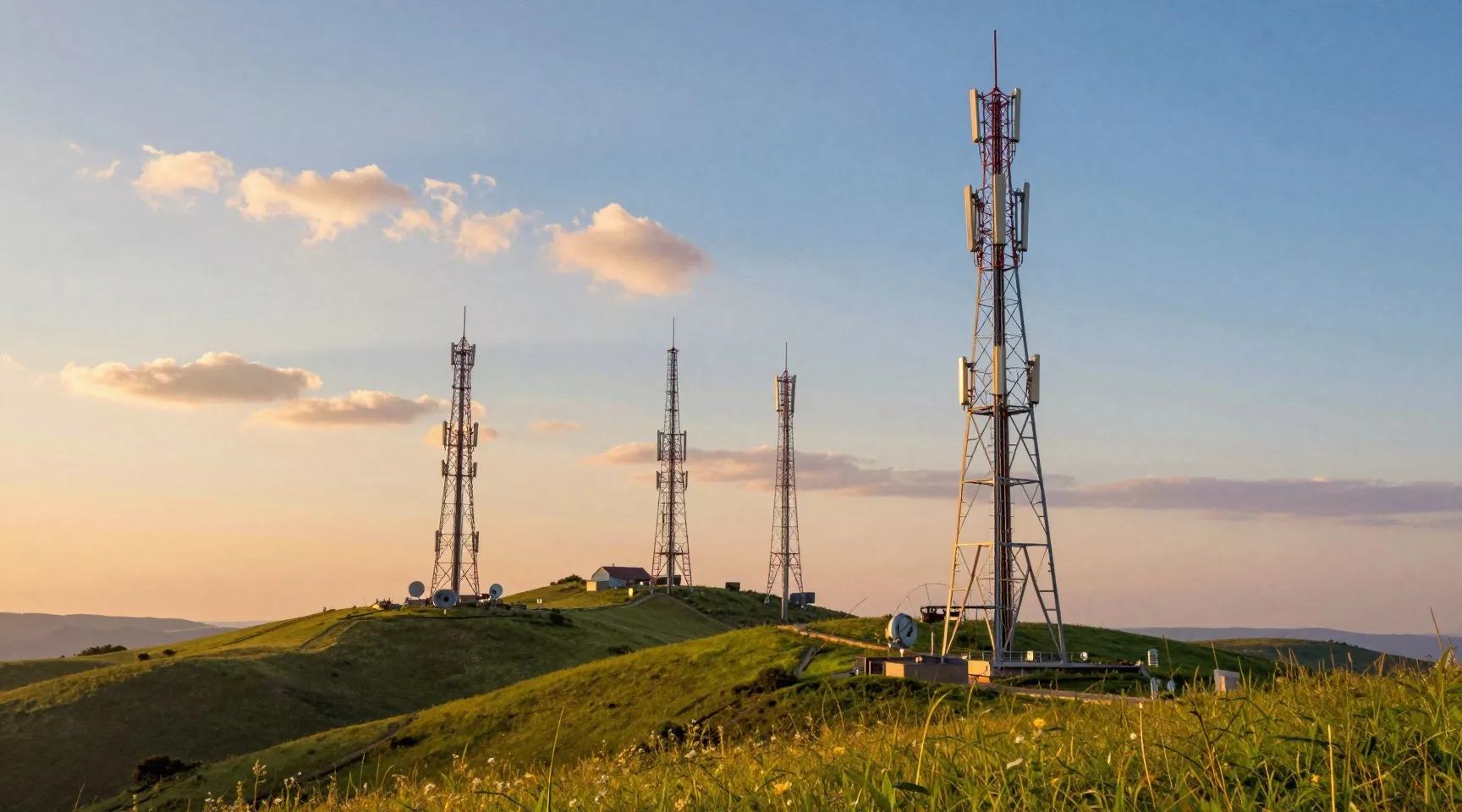
Telecom operators are managing portfolios that grow by hundreds of sites each quarter while their field teams stay the same size or shrink. Every tower is a collection of equipment from different vendors speaking different protocols. Ericsson radios do not talk to diesel generators. Fuel sensors do not sync with your NOC dashboard. And now solar panels and battery banks at remote sites add yet another data stream nobody has time to watch.
Meanwhile, 5G densification is multiplying site counts 3x to 5x with small cells, ODAS nodes, and MIMO antenna arrays that consume significantly more power per site than previous generations. Each one is another point of failure that needs monitoring, alarming, and compliance tracking. The old approach of vendor-specific tools and manual ticket routing cannot keep pace with this expansion.
Compliance exposure
FCC tower lighting mandates and NOTAM filing deadlines leave zero margin. A single missed alert can trigger penalties that compound at $15,000 per hour until the issue is resolved and reported.
Truck rolls at $150 to $1,500 each
A standard daytime truck roll costs $150 to $1,000 depending on site location and crew type. Night, weekend, and overtime dispatches jump to $1,500 or more. A tower company with 10,000 sites averaging two visits per month per site is spending $36M to $240M annually on site visits. Half those trips turn out to be false alarms or issues that could have been resolved remotely.
Network expansion outpacing monitoring capabilities
5G small cells and ODAS nodes are multiplying site counts 3x to 5x while MIMO antenna arrays are crushing OPEX budgets with higher power consumption per site. Solar and battery hybrid power systems at remote locations add yet another layer of monitoring complexity that legacy tools were never designed for.
Alarm fatigue at the NOC
Disconnected monitoring tools flood your operations center with undifferentiated alerts. When every alarm looks equally urgent, the critical signals get buried and real problems slip through unnoticed.
How Mango by Radix IoT Solves It
Four steps from chaos to clarity
Connect every protocol
Mango by Radix IoT speaks SNMP, Modbus, BACnet, OPC-UA, MQTT, DNP3, HTTP/REST, SQL, and 20+ more data source types natively. Your radios, generators, rectifiers, fuel sensors, HVAC, and access controls all feed into one platform without rip-and-replace. For sites with solar+battery hybrid power, Mango by Radix IoT tracks state of charge, state of health, charge/discharge cycles, and panel output so your NOC knows which sites are running on backup before a generator needs to be dispatched.
25 data source types supported out of the boxNormalize IT and OT into one model
Every tower site runs both IT equipment (switches, routers, radios via SNMP) and OT systems (generators, rectifiers, HVAC via Modbus). Mango by Radix IoT normalizes both worlds into a single data model so your NOC sees network health and site infrastructure in one correlated view. Cross-site comparisons, portfolio dashboards, and trend analysis work seamlessly regardless of what equipment or protocol is installed at each location.
One data model across IT and OT at every siteIntelligent alarming
Six-level severity, contextual suppression, and rule-based escalation cut through noise so your NOC responds to real issues. FCC tower lighting alerts and NOTAM triggers get priority routing with automated audit trails.
Alarm fatigue reduced by structured rationalizationRemote diagnostics and control
Diagnose, reboot, and fine-tune equipment from anywhere through secure Cloud Connect. No VPNs, no open ports. Your field team goes on-site only when a physical presence is genuinely required.
Secure access to every site, from any locationThe Numbers
Measured impact across tower portfolios
Based on aggregated data from Radix IoT tower operator deployments, 2023-2025
FAQ
Questions from telecom operators
How does Mango by Radix IoT help with FCC tower lighting and NOTAM compliance?
Mango by Radix IoT continuously monitors tower lighting status and immediately alerts your team the moment something falls out of spec, reducing the risk of missed NOTAM filings. Automated tracking produces a clear audit trail and gives your team visibility in minutes instead of hours. The $15,000/hour penalty clock stops faster because the right people are notified immediately with actionable context.
We have dozens of equipment vendors across our portfolio. Does Mango by Radix IoT support SNMP and other telecom protocols?
Yes. Mango by Radix IoT supports SNMP v1/v2c/v3 natively, along with Modbus, BACnet, OPC-UA, MQTT, DNP3, HTTP/REST, SQL, and 20+ additional data source types. That means your Ericsson radios, Nokia equipment, diesel generators, rectifiers, fuel sensors, and access controls all feed into a single normalized data layer without requiring vendor-specific integrations.
Can Mango by Radix IoT scale to portfolios with tens of thousands of tower sites?
Yes. Mango by Radix IoT was built for exactly this kind of distributed, high-volume environment and handles thousands of concurrent data sources without performance degradation. New sites can be onboarded without re-architecting your monitoring stack. Mango by Radix IoT connects to existing equipment via SNMP and other protocols, eliminating the need to deploy additional hardware at cell sites.
How does this help reduce truck rolls across a large portfolio?
Operators using Mango by Radix IoT typically see a 40% reduction in truck rolls. Remote diagnostics through Mango by Radix IoT's Cloud Connect module let your team see what is happening at a site in real time and take corrective action without dispatching a technician. Issues that previously required a physical visit can be resolved or triaged remotely, and the savings add up quickly across a 10,000+ site portfolio.
Can Mango by Radix IoT support AI-driven NOC optimization?
Yes. Mango by Radix IoT provides the clean, unified, real-time data layer that AI and predictive analytics tools require. By normalizing telemetry from diverse equipment and protocols into consistent data streams, it enables accurate anomaly detection, predictive maintenance, and energy optimization workflows. Mango by Radix IoT is the data foundation that makes AI-driven operations possible, not another AI tool layered on top of fragmented data.
How does Mango by Radix IoT connect to cell sites and edge locations?
Mango by Radix IoT connects to existing equipment at cell sites via SNMP and other native protocols — no additional hardware deployment required at tower locations. For sites behind firewalls or with intermittent connectivity, Cloud Connect provides secure remote access without VPNs or open ports. This approach eliminates the cost and complexity of deploying edge hardware at thousands of remote sites.
Industry Brochures
Telecom Solutions Overview
PDF, 4.8 MB
Fiber and ISP Solutions
PDF, 3.0 MB
See Mango by Radix IoT in a telecom environment
Walk through remote site monitoring with your tower infrastructure. Your protocols, your sites.