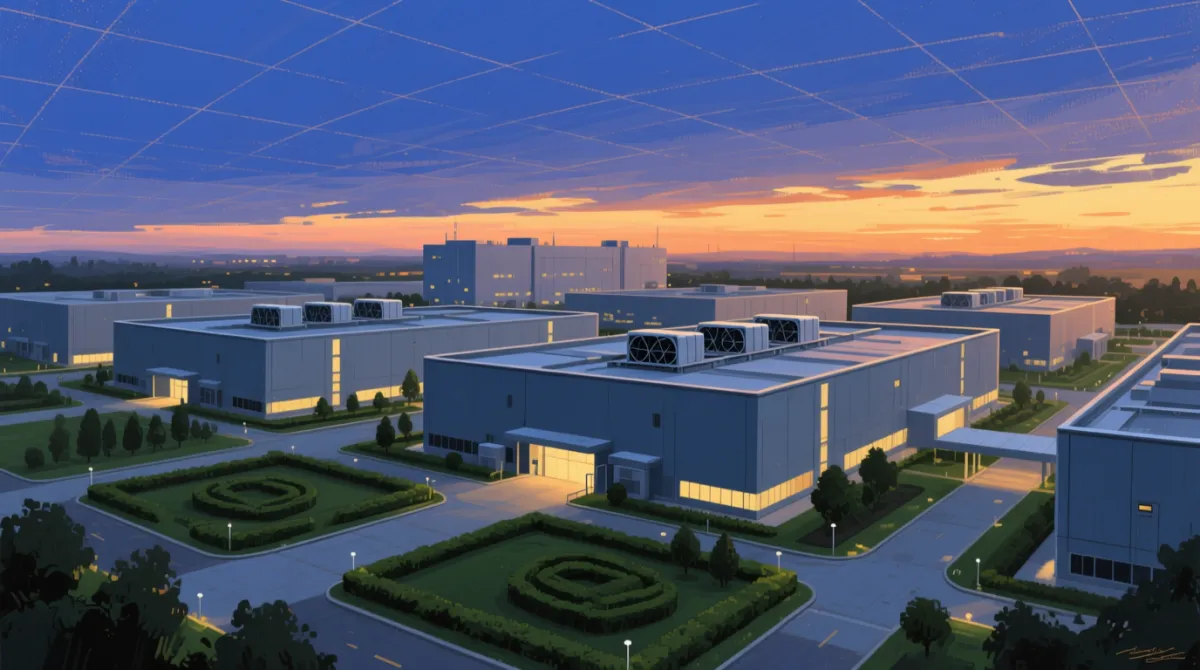
In this informative Q&A Arieh Broide, who has been involved in the emerging landscape of the data center sector for over several decades, shares his perspective on the industry’s growth and challenges, plus opportunities including how Radix IoT is helping data centers be more efficient, reliable, and sustainable.
Q: The data center industry is growing at a rapid pace. Can you share what’s fueling this growth?
A: Data centers form the technological foundation of modern digital services. Every online activity depends on these physical facilities worldwide, though their importance often goes unrecognized. As technology evolves, computational demands increase significantly. File sizes have expanded from 1MB to 20-50MB, while search queries have transformed into sophisticated AI-driven requests. The industry continues rapid expansion, representing one of the fastest-growing essential sectors that remains largely misunderstood by the general public.
Q: Based on the overall industry landscape, what are the biggest trends and challenges you’re seeing with data centers?
A: Multiple data center types now exist—including micro, edge, colocation, and enterprise facilities—often deployed in varied combinations to meet demand.
Key challenges include:
Consolidation and Integration: The massive amount of consolidation happening in the industry creates difficulties maintaining service quality during mergers while managing reporting requirements. Incompatible systems complicate monitoring and delay efficiency gains.
Infrastructure Upgrades: Retrofitting aging facilities to handle increased power density and efficiency demands presents new operational scenarios. Heat distribution and cooling patterns change unpredictably, necessitating proactive monitoring before equipment failures occur.
Sustainability Pressures: Data centers face increasing pressure to reduce carbon footprints and energy consumption while meeting environmental regulations and community concerns about noise and pollution.
Q: What advice do you have for data center operators as they navigate these challenges?
A: Operators should prioritize flexible, open monitoring systems. Given rapid industry changes, future reporting needs remain uncertain, making adaptable platforms essential. Select systems that integrate seamlessly with diverse equipment and enable data visibility across multiple locations and environments from a unified source.
Open platforms offer significant advantages—the best experts doing what they do best and an integrated monitoring system where everything is talking to each other.
Q: How have you seen the Radix IoT solution help Data Centers with these challenges?
A: Radix IoT’s Mango platform unifies data across disparate systems and locations into one integrated view, enabling efficient, proactive operations. As a hardware and vendor-agnostic open platform, it normalizes data from all equipment, sensors, and devices across the data center ecosystem—whether micro, edge, enterprise, or colocation facilities.
The solution provides real-time insights allowing operators to address issues immediately, triage problems remotely, maximize uptime, minimize service disruptions, reduce site visits, and improve operational efficiency.
Q: Why is the Radix IoT solution ideal for this fast-growing, evolving landscape?
A: Radix IoT excels at scaling and adapting to organizational changes. During mergers or acquisitions, it bridges different systems across both organizations’ facilities, eliminating manual data integration work. For retrofits, it works with existing equipment and newer systems simultaneously, allowing incremental upgrades without expensive replacement while providing consolidated visibility.